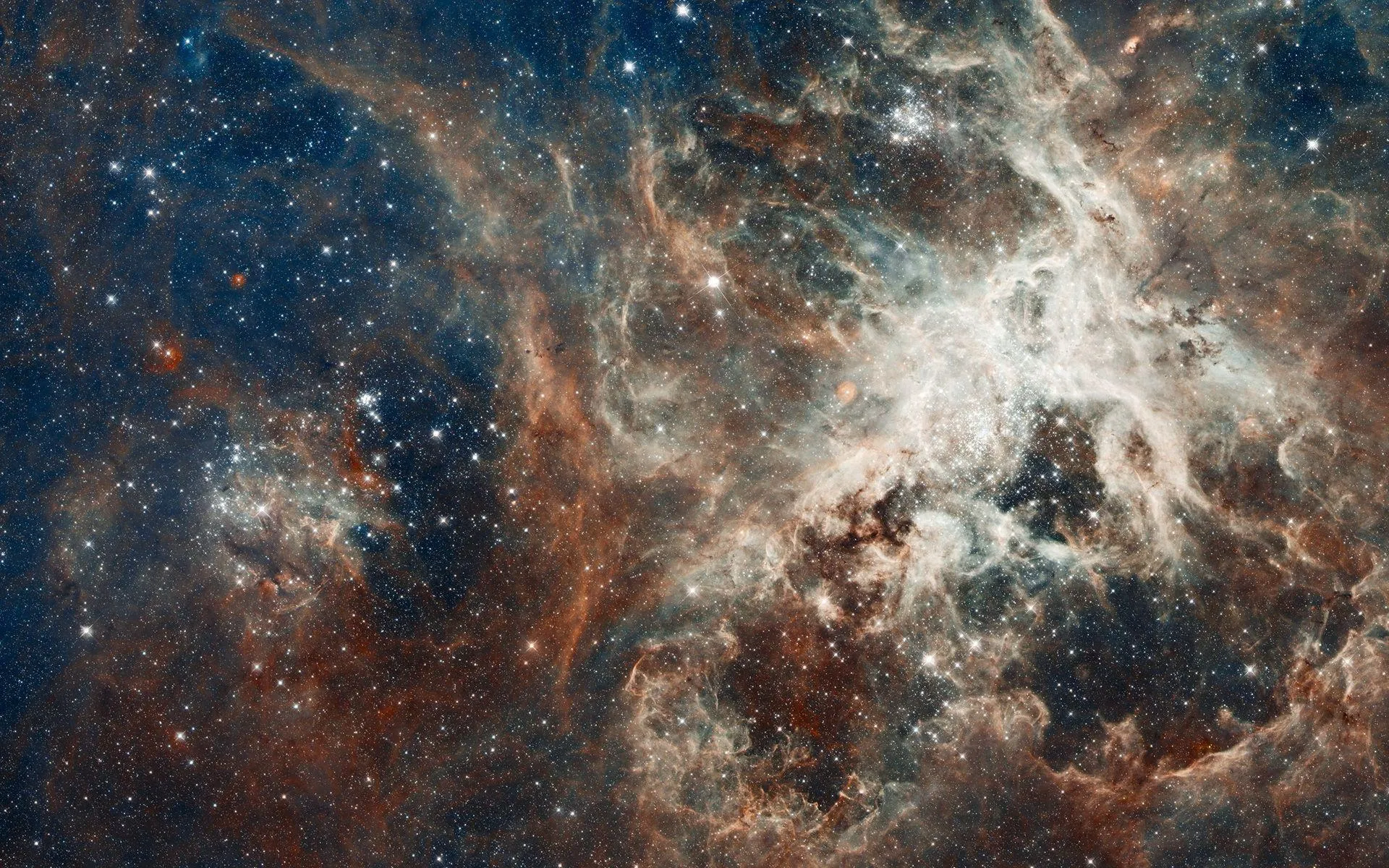
What is the Tarantula Nebula
The Tarantula Nebula, officially cataloged as 30 Doradus, is a vast and vibrant star-forming region located in the Large Magellanic Cloud (LMC), a satellite galaxy of the Milky Way. This celestial marvel is a hotspot of stellar birth, hosting some of the most massive and luminous stars known. Its intricate structure, filled with glowing gas and dark, dusty lanes, presents a stunning spectacle for astronomers and astrophotographers alike. Named for its resemblance to a spider, with the bright central region as the body and the surrounding filaments as legs, the Tarantula Nebula is a treasure trove of astronomical phenomena, offering insights into the processes of star formation and galactic evolution. Its proximity to Earth and its impressive size make it an ideal target for observation, allowing scientists to study stellar nurseries in detail.
Location and Discovery
The Tarantula Nebula resides in the Large Magellanic Cloud (LMC), which is approximately 160,000 light-years away from Earth. This makes it relatively close compared to other nebulae, allowing for detailed observation. It was first cataloged in 1751 by Nicolas-Louis de Lacaille, a French astronomer, who observed it from the Cape of Good Hope. However, its true nature as a nebula, a vast cloud of gas and dust, wasn’t understood until later. The nebula’s prominence in the southern sky and its high luminosity have made it a subject of intense study, leading to numerous discoveries about star formation, the lifecycle of stars, and the composition of interstellar space. Its location in the LMC also provides a unique perspective on the dynamics of a dwarf galaxy and its interaction with the Milky Way.
Telescopes and Observations

The Tarantula Nebula is a popular target for both professional and amateur astronomers, accessible through a variety of telescopes. Ground-based observatories, equipped with sophisticated instruments, provide detailed images and spectra of the nebula. Space-based telescopes, such as the Hubble Space Telescope and the James Webb Space Telescope, offer unparalleled views, penetrating the dust clouds to reveal the intricate structures within. These telescopes utilize different wavelengths of light, including visible light, infrared, and ultraviolet, to study various aspects of the nebula, from the energetic processes of star formation to the composition of the gas and dust. Through these observations, scientists have been able to study the nebula’s central cluster of stars, known as R136, which houses some of the most massive and luminous stars known. These powerful stars emit intense radiation, shaping the surrounding nebula and driving the processes of star formation. The ongoing advancements in telescope technology continue to enhance our understanding of the Tarantula Nebula.
Significance and Research
The Tarantula Nebula is a vital laboratory for studying star formation, stellar evolution, and the effects of massive stars on their environment. Its proximity and rich composition provide an excellent opportunity to examine the processes by which stars are born from interstellar gas and dust. Research on the Tarantula Nebula helps scientists understand the formation of massive stars, which have a significant impact on the evolution of galaxies. These stars, at the end of their lives, explode as supernovae, enriching the interstellar medium with heavy elements and triggering the formation of new stars. The nebula also contains a wealth of information about the interstellar medium, including the composition of the gas and dust, the magnetic fields, and the presence of molecules essential for the formation of life. By studying the Tarantula Nebula, scientists gain insights into the processes that shape the universe, from the smallest particles to the largest structures.
How to View the Tarantula Nebula
Best Viewing Times and Conditions

The Tarantula Nebula is best viewed from the Southern Hemisphere, where it appears high in the night sky. The optimal viewing period is during the Southern Hemisphere’s winter months, typically from June to August. However, it can be observed throughout the year. The best conditions for viewing include a dark sky, away from light pollution, and a clear atmosphere. The absence of moonlight is also ideal, as it reduces the background brightness and allows the faint details of the nebula to be seen more clearly. To maximize your viewing experience, it is advisable to plan your observation sessions around the new moon phase, when the moon is not visible in the night sky. Consulting a star chart or using a planetarium app can help you locate the nebula and determine the optimal viewing times for your location.
Using a Telescope
A telescope is essential for viewing the Tarantula Nebula in detail. A small to medium-sized telescope, with an aperture of at least 4 inches (100mm), is recommended. The larger the aperture, the more light the telescope can gather, allowing you to see more of the nebula’s intricate structure. A low-power eyepiece will provide a wider field of view, making it easier to locate and observe the nebula. As you increase the magnification, you can begin to resolve the individual stars and the surrounding filaments. When setting up your telescope, ensure that it is properly aligned and focused. Using a red light flashlight can help preserve your night vision while setting up and observing. A good quality telescope, coupled with a dark sky, will reveal the beauty of the Tarantula Nebula. Don’t forget to take breaks and allow your eyes to adjust to the darkness to fully appreciate the celestial wonders.
Astrophotography Techniques
Astrophotography allows you to capture stunning images of the Tarantula Nebula, revealing details invisible to the naked eye. A dedicated astrophotography setup typically includes a telescope with a tracking mount, a camera, and various filters. Long-exposure photography is key to capturing the faint light of the nebula. You can use a DSLR camera or a dedicated astronomical camera. A tracking mount is necessary to compensate for the Earth’s rotation and keep the nebula in the frame. Using narrowband filters, such as those that isolate specific wavelengths of light emitted by ionized gases (like hydrogen-alpha), can enhance the visibility of the nebula’s intricate structure. Post-processing techniques, using software such as Adobe Photoshop or PixInsight, are essential for enhancing the image, removing noise, and bringing out the colors. The process requires practice and patience, but the results are incredibly rewarding, offering a unique perspective on the beauty of the Tarantula Nebula.
The Wonders within the Tarantula Nebula

Star Formation
The Tarantula Nebula is a prime example of a stellar nursery, where stars are born from clouds of gas and dust. Within the nebula, intense radiation and stellar winds from massive stars sculpt the surrounding gas and dust, creating the conditions for new stars to form. The central region of the nebula, R136, is home to a dense cluster of young, massive stars that are still actively forming. These stars emit powerful ultraviolet radiation, which ionizes the surrounding gas, causing it to glow. The process of star formation involves the gravitational collapse of dense regions within the nebula, leading to the ignition of nuclear fusion and the birth of new stars. Studying the Tarantula Nebula provides insights into the initial conditions of star formation and how massive stars influence their environment.
Nebulae and Gas Clouds
Nebulae, such as the Tarantula Nebula, are vast clouds of gas and dust that serve as the building blocks of stars. These nebulae are composed primarily of hydrogen and helium, along with traces of heavier elements. The intricate structures of nebulae, including filaments, bubbles, and dark lanes, are shaped by a variety of forces, including stellar winds, radiation pressure, and magnetic fields. The Tarantula Nebula’s stunning appearance is the result of the interaction between these forces and the presence of young, massive stars. Within the nebula, regions of dense gas and dust can collapse under gravity, leading to the formation of new stars. Nebulae provide a window into the lifecycle of stars, showcasing the processes of stellar birth and evolution. The study of nebulae helps us understand the composition of the interstellar medium and the conditions that support star formation.
Supernova Remnants

The Tarantula Nebula is also home to the remnants of supernova explosions, which are the explosive deaths of massive stars. Supernova remnants are expanding clouds of gas and dust that are enriched with heavy elements synthesized in the core of the dying star. The remnants provide valuable insights into the late stages of stellar evolution and the processes that lead to the formation of heavy elements, essential for the formation of planets and life. Studying supernova remnants helps astronomers understand the physics of supernovae, the distribution of heavy elements in galaxies, and the impact of supernovae on the interstellar medium. The remnants within the Tarantula Nebula reveal the history of stellar evolution in this dynamic region, offering clues about the fate of massive stars and their role in shaping the universe.
Future of Tarantula Nebula Research
Ongoing Studies and Missions
The Tarantula Nebula continues to be a focus of extensive research, with ongoing studies using both ground-based and space-based telescopes. Scientists are analyzing the nebula’s composition, structure, and star-forming activity using advanced instruments and techniques. Missions like the James Webb Space Telescope are providing unprecedented insights into the nebula, allowing for the study of the earliest stages of star formation and the distribution of dust and gas within the nebula. These missions will continue to observe the nebula over the coming years, gathering crucial data and refining our understanding of the universe. The data collected will help researchers gain a deeper understanding of stellar evolution, galaxy dynamics, and the fundamental processes of the cosmos.
Technological Advancements

Technological advancements continue to revolutionize our ability to study the Tarantula Nebula and other celestial objects. The development of new telescope technologies, such as adaptive optics and advanced detectors, enables astronomers to obtain sharper, more detailed images. Space-based observatories offer a unique advantage by observing in wavelengths that are blocked by Earth’s atmosphere, such as infrared and ultraviolet light. These advancements allow for the study of the nebula in greater detail, allowing scientists to study the earliest stages of star formation and the interaction between stars and their environment. Furthermore, advancements in computing power and data analysis techniques enable astronomers to process and analyze vast amounts of data, leading to new discoveries and insights into the mysteries of the Tarantula Nebula.