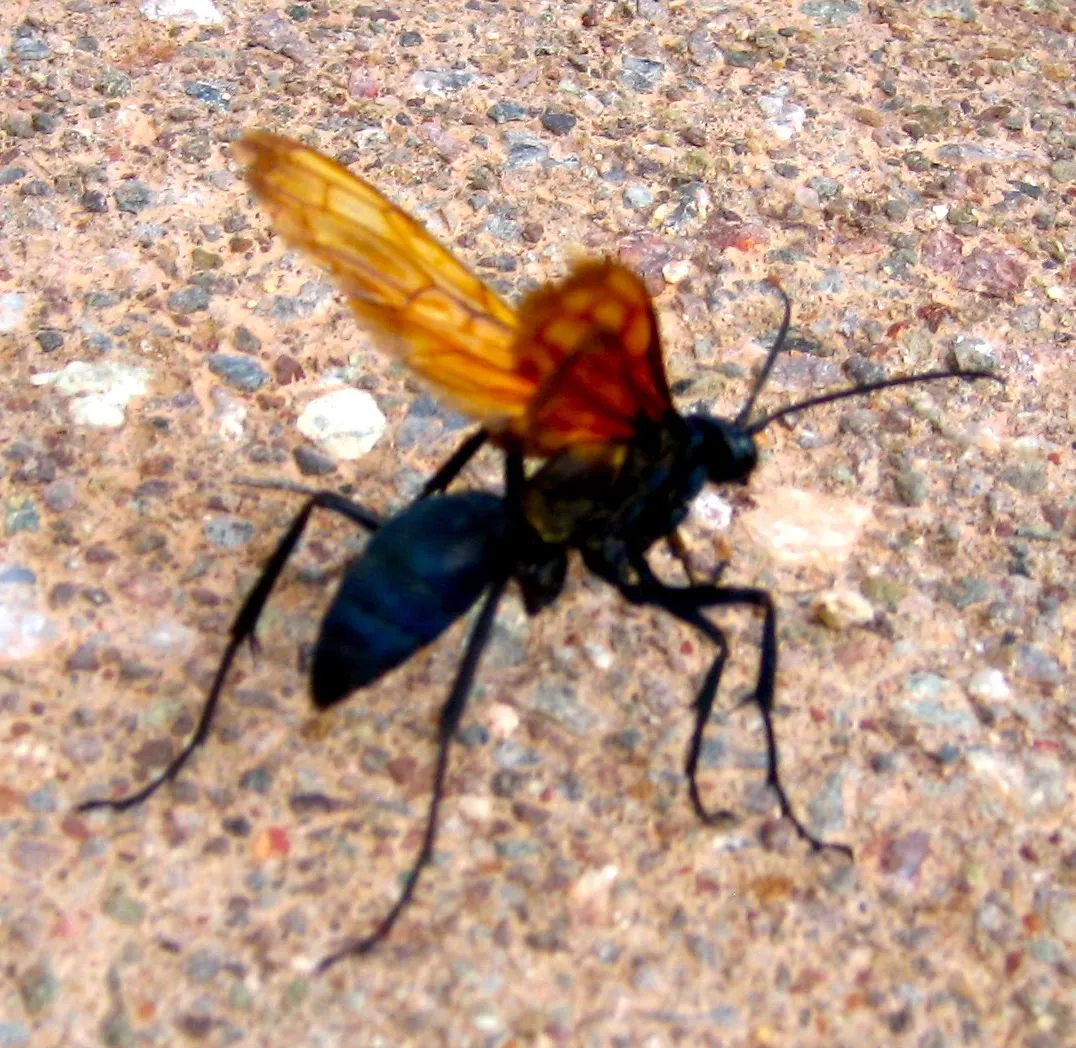
What is a Tarantula Hawk?
The tarantula hawk, a striking member of the Pompilidae family, is a large, powerful wasp renowned for its intimidating size and extraordinary hunting behavior. Found in various parts of the world, including the southwestern United States and specifically Colorado, these wasps are a fascinating subject for entomologists and nature enthusiasts alike. They are solitary creatures, meaning they do not live in colonies like honeybees or social wasps. Instead, each female tarantula hawk is responsible for her own hunting, nesting, and reproduction, making them formidable predators in their own right. Their existence adds a layer of complexity to the ecosystems they inhabit, keeping spider populations in check and contributing to the overall balance of nature.
Appearance of the Tarantula Hawk
Tarantula hawks are easily recognized due to their vibrant coloration and substantial size. They boast a dark, often black or bluish-black body, contrasted by wings that can range from smoky to a deep orange or rust color. This eye-catching appearance serves as a warning to potential predators, signaling their potent sting. The wasp’s legs are long and spiny, perfectly adapted for maneuvering around their prey. The antennae are also long and slender, playing a vital role in detecting and sensing their environment, particularly when seeking out tarantulas. These physical attributes combined make them one of the most easily recognizable wasp species in the world, sparking both curiosity and respect from those who encounter them.
Size and Distinctive Features

One of the most notable features of the tarantula hawk is its size. Females are generally larger than males, with a body length that can reach up to two inches. This substantial size, coupled with their striking coloration, makes them stand out in their natural habitats. Their strong mandibles and formidable stingers contribute to their predatory prowess, giving them the tools needed to subdue their massive spider prey. The unique combination of size, color, and weaponry makes the tarantula hawk a remarkable example of adaptation and survival in the animal kingdom.
Where Do Tarantula Hawks Live?
Tarantula hawks are typically found in arid and semi-arid environments, where tarantulas, their primary prey, are abundant. These wasps are widespread across the southwestern United States, including states like Arizona, New Mexico, and Colorado, as well as parts of South America and Australia. The specific habitats they favor include deserts, grasslands, and areas with scrub vegetation. Their ability to thrive in these challenging environments showcases their resilience and adaptability. These habitats provide them with ample opportunities for hunting and nesting, which are essential for their survival and reproduction.
Colorado Habitat and Range
In Colorado, tarantula hawks are primarily found in the warmer, drier regions of the state, such as the eastern plains and the southwestern areas. They tend to avoid the high-altitude, mountainous regions. Their presence in Colorado is a testament to the state’s diverse ecosystems and the suitability of certain areas to support both the wasp and its prey. Monitoring these areas is important to understand the impacts of climate change and human development on their survival and the overall health of Colorado’s ecosystems.
Their Predatory Lifestyle

Tarantula hawks are among the most fearsome predators in the insect world. Their diet consists almost exclusively of tarantulas, which they paralyze with a potent sting. Once the tarantula is immobilized, the wasp drags the spider to a burrow or pre-dug nest. The female then lays a single egg on the spider’s abdomen. When the egg hatches, the larva consumes the tarantula, providing a gruesome but effective source of nutrition for the developing wasp. This predatory behavior plays a critical role in regulating tarantula populations, impacting the dynamics of local ecosystems. This cycle showcases the efficiency of natural selection and the intricate predator-prey relationships found in nature.
How They Hunt Tarantulas
The hunting process is a remarkable display of skill and strategy. The female tarantula hawk actively searches for tarantulas, often encountering them in their burrows or wandering on the ground. Upon finding a tarantula, the wasp engages in a brief, often dramatic, confrontation. The tarantula hawk uses its sting to paralyze the spider, aiming for a specific nerve center. Once the tarantula is immobilized, the wasp begins the laborious task of dragging it to a pre-made or repurposed burrow. This can be a significant feat, considering the size difference between the wasp and its prey. This hunting behavior is a critical survival strategy, showcasing the tarantula hawk’s ability to exploit its environment effectively.
The Tarantula Hawk Sting
The sting of the tarantula hawk is legendary, known for its excruciating pain. The sting is primarily used to paralyze the tarantula, but it can also be delivered in self-defense. The pain, while intense, is not considered medically dangerous unless someone is allergic. The Schmidt Sting Pain Index, a scale developed by entomologist Justin Schmidt, ranks the tarantula hawk sting as one of the most painful stings in the insect world. It’s a searing, immediate pain that quickly subsides. Despite the intensity, the sting isn’t fatal, and the pain typically lasts for only a few minutes. It is important to note that these wasps are generally not aggressive and will only sting if provoked or threatened.
The Schmidt Pain Index

The Schmidt Sting Pain Index rates insect stings based on the intensity of the pain they cause. The tarantula hawk sting is often rated at a level 4, the highest level, indicating an excruciating experience. The index allows scientists and enthusiasts to compare the pain levels of different insect stings. While the pain is intense and causes immediate distress, it is generally short-lived, providing valuable information for understanding the impact of these stings. The index serves as a tool to describe the sensory experiences associated with insect venom.
Tarantula Hawk Reproduction
The reproductive cycle of the tarantula hawk is fascinating. After paralyzing the tarantula, the female drags the spider to a prepared nest or burrow. She then lays a single egg on the spider’s abdomen, ensuring that the larva has a ready source of food when it hatches. The wasp larva then consumes the still-living tarantula, growing inside the spider’s body. It continues to feed until it is ready to pupate and transform into an adult wasp. This parasitic relationship is a key element in the life cycle, contributing to the wasp’s survival and population growth. The process is a stark illustration of nature’s efficiency and resourcefulness.
The Lifecycle of the Tarantula Hawk
The lifecycle begins with the egg laid on the paralyzed tarantula. Once the egg hatches, the larva feeds on the spider, growing and molting as it consumes its host. Once fully grown, the larva spins a cocoon and pupates within the spider’s burrow. The pupa then undergoes metamorphosis, transforming into an adult wasp. The newly emerged adult wasp then digs its way out of the burrow, ready to hunt and reproduce, restarting the cycle. The complete lifecycle, from egg to adult, can take several months, depending on the environmental conditions. This cyclical pattern emphasizes the interdependencies within the ecosystem, highlighting the crucial role of each life stage in the overall process.
Conservation Status and Threats

Fortunately, tarantula hawks are not currently considered endangered or threatened. Their populations are relatively stable across their range, including Colorado. However, like all species, they face potential threats from habitat loss due to urbanization and agricultural expansion. The use of pesticides can also negatively impact the wasp and its prey. Understanding these potential threats and monitoring their populations is important to ensure their continued survival. Public awareness and conservation efforts can also play a significant role in protecting these remarkable insects and their habitats.
What to Do if You Encounter One
If you encounter a tarantula hawk, the best approach is to observe it from a distance. Avoid any sudden movements or attempts to handle or provoke the wasp. Tarantula hawks are generally not aggressive and will only sting if they feel threatened. Appreciating the wasp from afar is the safest way to experience this natural wonder. If you are stung, seek medical attention if you experience severe allergic reactions, and remember the pain, while intense, typically subsides relatively quickly. Educating yourself and others about these fascinating insects can help promote respect and appreciation for their essential role in our ecosystems.