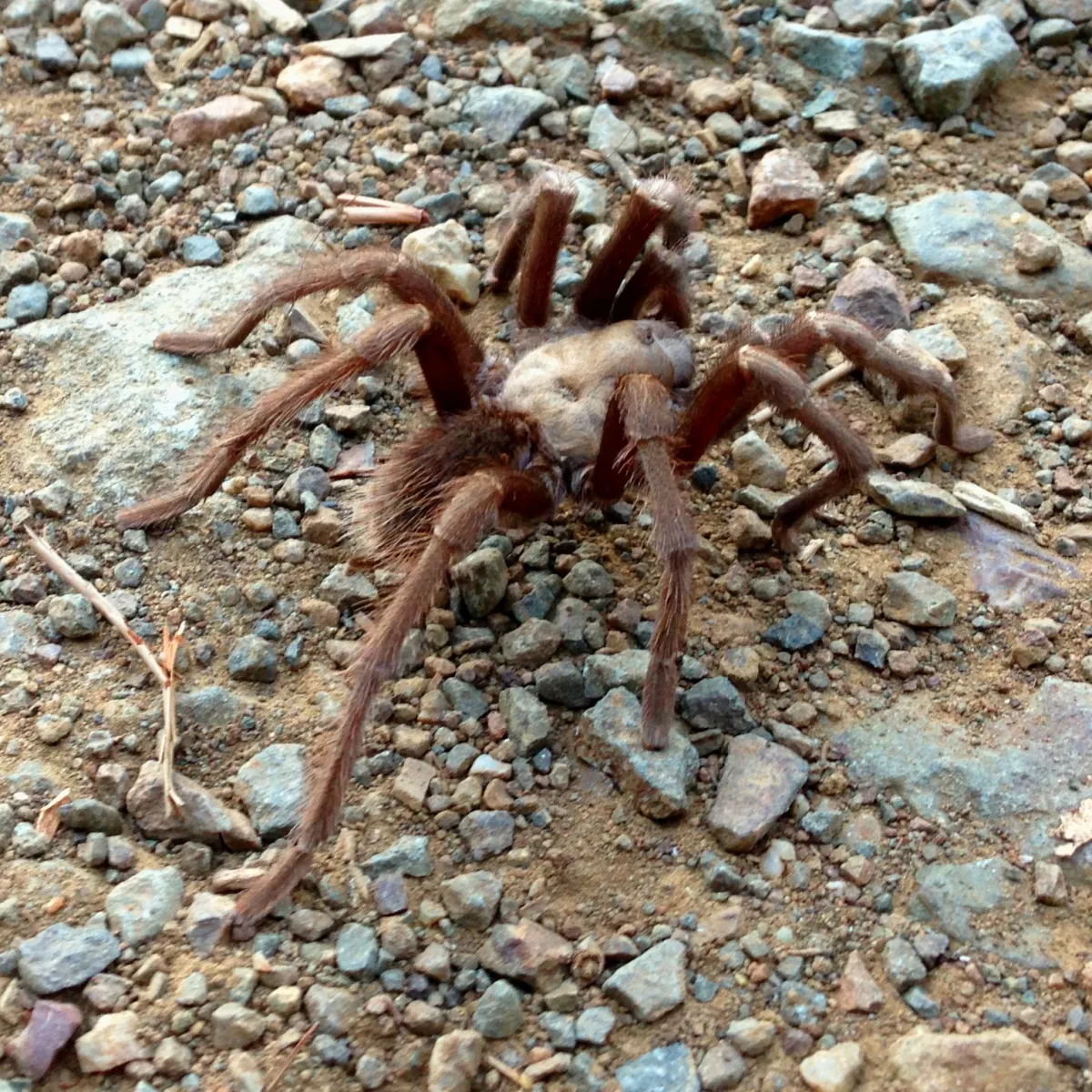
Tarantulas, with their impressive size and hairy appearance, are fascinating creatures. One of the most intriguing aspects of these arachnids is how they move. Their locomotion is a complex interplay of anatomy, physiology, and environmental adaptation. Understanding how a tarantula moves provides insight into the evolutionary strategies that have allowed them to thrive in diverse habitats. This article dives deep into the mechanics, gaits, and factors that influence a tarantula’s movement, unveiling some amazing facts along the way. Get ready to explore the world of these incredible creatures, one step at a time.
The Mechanics of Tarantula Movement
The movement of a tarantula is a marvel of biological engineering. It’s a testament to the efficiency of natural selection. Unlike humans, tarantulas don’t have bones; instead, they have an exoskeleton, a hard, protective outer shell made of chitin. This exoskeleton provides both protection and the points of attachment for muscles. The legs of a tarantula are segmented, with each segment connected by flexible joints. This allows for a wide range of motion and adaptability. The movement itself is a combination of muscle contractions and the exploitation of hydrostatic pressure within the tarantula’s body. These processes work in concert to facilitate the diverse array of movements observed in these remarkable arachnids.
Leg Structure and Function
The structure of a tarantula’s leg is crucial to its movement. Each leg comprises seven segments: the coxa, trochanter, femur, patella, tibia, metatarsus, and tarsus. Each segment has a specific function. The coxa connects the leg to the body, while the trochanter acts as a hinge. The femur, patella, and tibia are the primary levers for movement, providing power and reach. The metatarsus and tarsus, which include the claws, are essential for gripping surfaces. The legs are covered in sensory hairs (setae) that help the tarantula detect vibrations, air currents, and the texture of surfaces, which further refine their movements and enhance their hunting prowess. The effectiveness of their legs is best demonstrated when they’re exploring the terrain.
The Role of Joints and Muscles

Joints are the key to a tarantula’s flexibility and range of motion. They are flexible connections between the leg segments, allowing the tarantula to bend, twist, and extend its legs. Muscles, attached to the inside of the exoskeleton, contract and relax to control the movement of these joints. These muscles are arranged in antagonistic pairs, meaning that one muscle contracts to move a joint in one direction, while another muscle contracts to move it in the opposite direction. This system allows for precise control over leg movements. The complex interplay of these joints and muscles enables tarantulas to navigate diverse terrains with surprising agility, including climbing and moving at speed.
Hydrostatic Pressure and Movement
Tarantulas also use hydrostatic pressure to aid in movement, particularly in extending their legs. The hemolymph, the spider’s version of blood, is pumped into the legs, which increases the pressure within the leg segments. This pressure helps to extend the legs, enabling them to walk and climb. The tarantula’s ability to control this pressure is crucial for its agility. While muscles primarily control leg flexion (bending), hydrostatic pressure is vital for leg extension. This pressure-based system complements the muscle-driven movements, contributing to the overall efficiency of the tarantula’s locomotion.
Different Gaits of Tarantulas
Tarantulas don’t just move in one way; they have a variety of gaits they use depending on the situation. These gaits are adapted to different speeds, terrains, and purposes, from slow exploration to rapid hunting. Understanding these gaits offers a deeper appreciation for the adaptability of these creatures.
Slow Walking and Exploration

When a tarantula is exploring its environment, it typically uses a slow, deliberate walking gait. This involves a coordinated sequence of leg movements where it alternates the legs used for support. The tarantula usually has three legs on the ground at any given time, forming a stable tripod to maintain balance. This slow gait allows the tarantula to carefully assess its surroundings, detect potential threats or prey, and conserve energy. It is a meticulous process, ensuring that the tarantula maintains a secure footing on the ground, making sure it does not fall. This gait showcases their patience and calculated approach to their environment.
Rapid Running and Hunting
When a tarantula needs to move quickly, such as when chasing prey or escaping a predator, it switches to a faster gait. This involves a more rapid sequence of leg movements, with a greater emphasis on speed. Tarantulas can achieve impressive speeds, especially considering their size. The speed is achieved by increasing the stride length and the frequency of leg movements. This rapid locomotion is crucial for the tarantula’s survival, allowing it to hunt effectively and evade dangers. The running speed is determined by the tarantula’s physical condition and environmental factors, but it is always impressive.
Climbing Techniques and Abilities
Tarantulas are surprisingly adept climbers, using a combination of techniques to scale vertical surfaces. Their legs are equipped with claws, which provide grip, and adhesive pads (scopulae) on the tarsi, which help them stick to surfaces. The scopulae work through a mechanism of dry adhesion, allowing the tarantula to cling to smooth surfaces with remarkable strength. This combination of claws and adhesive pads allows tarantulas to climb glass, bark, and other surfaces with ease. Climbing is a crucial skill for tarantulas, enabling them to access different habitats and escape potential predators. This agility is often overlooked, but it is a key part of their survival strategy.
Adapting to Different Terrains

The environments that tarantulas inhabit vary greatly, from the dense forests to arid deserts. Their ability to move effectively across diverse terrains is essential for their survival. They have developed specific adaptations and strategies that allow them to move effectively in a variety of settings.
Navigating Flat Surfaces
On flat surfaces, tarantulas typically use their slow walking gait, ensuring stability and balance. The sensory hairs on their legs also play a crucial role, helping them detect vibrations and assess the surface texture. This information is crucial for maintaining a secure grip and making subtle adjustments to their gait. The tarantula’s ability to navigate flat surfaces smoothly is a testament to their efficient sensory-motor integration and their finely tuned leg coordination. This precision allows them to move with purpose and confidence across their chosen territory.
Conquering Inclines and Obstacles
When encountering inclines or obstacles, tarantulas rely on their climbing abilities and strategic adjustments to their gait. They use their claws and scopulae to gain traction, while their legs provide the necessary power to move upwards. On inclines, they may adopt a slower, more deliberate gait, ensuring that all legs are firmly planted before the next step. They can also use their pedipalps (the appendages near their mouths) to grip and pull themselves up. The ability to overcome obstacles is crucial for tarantulas, enabling them to access resources, escape predators, and establish their territories.
Moving on Various Substrates

The substrate a tarantula moves on significantly impacts its locomotion. On smooth surfaces, they rely heavily on their scopulae. On rough surfaces, their claws provide a strong grip. On loose substrates like sand or soil, the tarantula’s legs sink slightly, requiring more energy and a more deliberate gait. The sensory hairs on their legs are also very useful, helping the tarantula assess the characteristics of the substrate and adjust its movements accordingly. This adaptability allows tarantulas to thrive in a wide array of habitats, showcasing their remarkable capacity to adapt to their surroundings.
Factors Affecting Tarantula Movement
Several factors can influence how a tarantula moves, from its physical attributes to external conditions. The size, age, health, and environment of a tarantula can all affect its locomotion.
Size and Age
The size and age of a tarantula can affect its movement in several ways. Younger tarantulas, or spiderlings, often move more quickly and nimbly than adults. As they grow, their mass increases, which can make movement slightly slower. Larger tarantulas may also have different gaits compared to smaller ones, as they need to distribute their weight effectively. The exoskeleton also molts as the tarantula grows, and a freshly molted tarantula will often be less mobile until its new exoskeleton hardens. The size of the tarantula also dictates the size of prey and the environment it can traverse, making mobility and age closely related.
Health and Physical Condition

A tarantula’s health and physical condition are crucial determinants of its movement capabilities. A healthy tarantula will have strong muscles, intact legs, and a well-functioning nervous system. Injuries, parasites, or diseases can all impair movement. For example, a missing leg can significantly impact a tarantula’s gait and balance. Similarly, the presence of mites or other parasites can weaken the tarantula and reduce its ability to move effectively. Proper care, including a balanced diet and a clean environment, is essential for maintaining a tarantula’s health and optimal movement.
Environmental Factors
Environmental factors such as temperature and humidity can affect a tarantula’s movement. Tarantulas are ectotherms, meaning that their body temperature is regulated by their environment. Warmer temperatures generally increase their metabolism, leading to faster movement. Conversely, cooler temperatures can slow them down. Humidity levels are also important. Low humidity can cause dehydration, which can impact muscle function. Therefore, tarantulas often seek out microclimates within their habitats to regulate their body temperature and moisture levels. These environmental variables showcase the intricate relationship between a tarantula’s life and its surroundings.
In conclusion, the way a tarantula moves is a complex and fascinating subject that combines anatomy, physiology, and environmental adaptation. From the mechanics of their legs and joints to their diverse gaits and climbing abilities, tarantulas have evolved to be incredibly efficient movers. Various factors, including size, health, and environmental conditions, can influence their movement. Understanding these factors is key to appreciating the remarkable survival strategies of these amazing creatures. Next time you see a tarantula moving, take a moment to appreciate the intricate mechanics that allow it to navigate its world with such grace and precision.