What is the Goliath Birdeater Tarantula
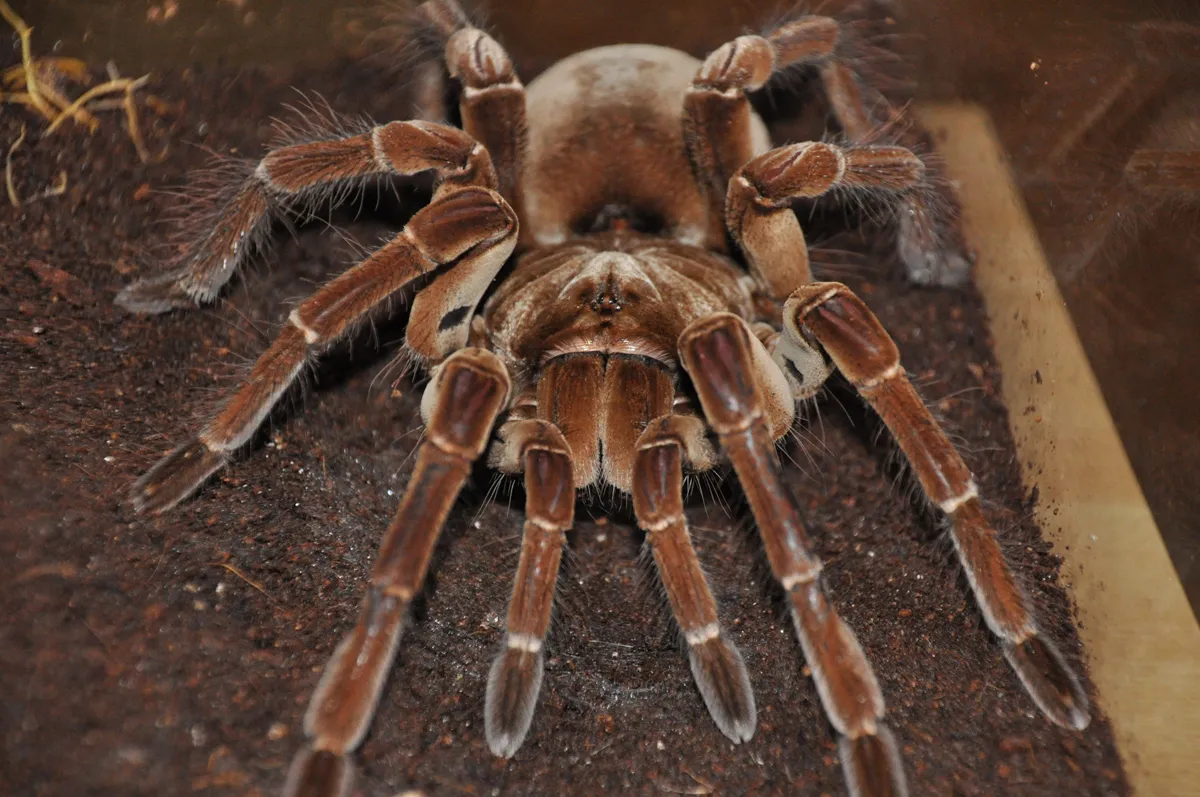
The Goliath Birdeater Tarantula, scientifically known as Theraphosa blondi, holds the title of the world’s largest spider by mass. Native to the rainforests of northern South America, this impressive arachnid is a fascinating creature that often captures the attention of both arachnid enthusiasts and those with a general interest in the animal kingdom. The name ‘Birdeater’ stems from observations of these spiders consuming small birds in the wild, although their diet primarily consists of insects and other invertebrates. This giant spider is a marvel of nature, showcasing unique adaptations for survival in its environment.
Size and Appearance
The Goliath Birdeater’s sheer size is perhaps its most striking feature. They can have a leg span of up to 12 inches (30 cm) or more, and can weigh over 6 ounces (170 grams). Their bodies are covered in dense, reddish-brown hairs, which provide camouflage and sensory information. The fangs of the Goliath Birdeater are also quite substantial, easily capable of piercing the skin. Their bodies are typically dark brown, with a somewhat lighter coloration on their legs. These spiders possess two main body sections, the cephalothorax and the abdomen. Their formidable size, combined with their hairy appearance, immediately sets them apart from other spider species.
Habitat and Distribution

Goliath Birdeater tarantulas are primarily found in the rainforests of northern South America, specifically in countries such as Brazil, Venezuela, Guyana, Suriname, and French Guiana. They inhabit humid, swampy areas and burrows, often near riverbanks or marshes. These spiders are terrestrial, meaning they live on the ground, and are well-adapted to the dense forest environment. Their burrows provide shelter from predators and the elements. They create their burrows in the ground, lined with silk to provide stability and protection. The distribution is heavily influenced by climate and the availability of prey, making the rainforests an ideal habitat for these spiders.
Diet and Feeding Habits
Despite their name, Goliath Birdeaters rarely consume birds in the wild; this behavior is more of an anecdote than a regular occurrence. Their diet primarily consists of insects, such as crickets and beetles, but they will also prey on other invertebrates, small amphibians, and occasionally, small rodents. They are ambush predators, meaning they wait for their prey to come within striking distance. They use their fangs to inject venom, which paralyzes the prey, allowing the spider to begin feeding. They then inject digestive enzymes into the prey to break down the tissues, which they then suck up. Their diet in captivity can be supplemented with pre-killed prey items, ensuring the safety of the handler.
Venom and Defense Mechanisms
The Goliath Birdeater possesses venom, but it is not considered highly dangerous to humans. Their bite can be painful, but it is generally not life-threatening. The spider’s primary defense mechanism is not its venom, but rather the urticating hairs on its abdomen. When threatened, the spider will rub its hind legs against its abdomen, flicking these tiny hairs into the air. These hairs are irritating to the skin and eyes, causing discomfort to deter potential predators. Additionally, they are known to make a hissing sound by rubbing their legs against their fangs to warn off threats, a behavior unique to some tarantula species.
Lifespan and Life Cycle

Goliath Birdeater tarantulas have a relatively long lifespan, especially for female spiders. Females can live for 15 to 25 years in captivity, while males typically have a shorter lifespan, around 3 to 6 years, as they often die shortly after mating. The life cycle of the Goliath Birdeater includes several molting stages as the spider grows. During molting, the spider sheds its exoskeleton, revealing a new, larger one underneath. This process makes them vulnerable. They start as spiderlings, growing through multiple molts to reach adulthood. The molting process is a critical stage in their life cycle, and can also be an indication of their health and growth.
Are Goliath Birdeaters Dangerous to Humans
Bite Severity
While the Goliath Birdeater possesses venom, its bite is generally not considered to be highly dangerous to humans. The venom can cause localized pain, muscle cramps, and swelling at the bite site. However, serious complications are rare. It’s important to note that individual reactions can vary. Allergic reactions are possible, just as they are with any venomous bite or sting. Medical attention should be sought if symptoms worsen or if systemic reactions occur. The bite is more of a mechanical injury from the fangs, and the venom is not potent enough to cause severe harm to humans.
Other Defense Mechanisms

Besides their bite, the Goliath Birdeater has several other defense mechanisms. The most significant is the urticating hairs on its abdomen. When threatened, the spider flicks these hairs toward the perceived threat, which can cause intense irritation to the skin and eyes. They also employ a defensive posture, rearing up on their hind legs with their fangs bared to appear more intimidating. They may also make a hissing sound by rubbing their legs against their fangs. All these defense mechanisms help to protect them from predators in their natural habitat, as well as in captivity, and are the spider’s primary methods of self-preservation.
How to Care for a Goliath Birdeater Tarantula
Enclosure Requirements
Providing the proper enclosure is crucial for the health and well-being of a Goliath Birdeater. A spacious terrarium is essential, with dimensions of at least 24x18x18 inches (60x45x45 cm) for an adult. The enclosure should have a secure lid to prevent escape. The substrate should be deep enough for the spider to burrow, usually a mix of peat moss, coconut fiber, and vermiculite, providing a moist, earthy environment. Maintaining a temperature between 75-85°F (24-29°C) and a humidity level of 75-85% is important. The enclosure should also include a water dish and hiding places such as cork bark or artificial plants, to make the spider feel safe and secure.
Feeding and Watering

Feeding a Goliath Birdeater is relatively straightforward. They should be fed appropriately sized insects, such as crickets, roaches, or mealworms, one or two times per week, depending on the spider’s size and appetite. It is important to remove any uneaten food within 24 hours to prevent mold growth. A shallow water dish should always be available, with fresh water provided daily. Avoid overfeeding your tarantula, and make sure to adjust the amount of food to avoid obesity. A well-fed Goliath Birdeater is a healthy Goliath Birdeater. During molting, the spider’s appetite may decrease, so it is not cause for concern if it refuses food.
Handling and Safety Precautions
Handling a Goliath Birdeater is generally not recommended, as it can be stressful for the spider, and there is a risk of being bitten or exposed to urticating hairs. If handling is necessary, it should be done with extreme caution, using a soft brush to gently coax the spider into a container. Avoid sudden movements and loud noises. Always wash your hands thoroughly after handling the spider or working in its enclosure. It is also advisable to avoid contact with the urticating hairs. Always prioritize the spider’s safety and well-being. Careful observation and responsible pet ownership will ensure the health and longevity of your Goliath Birdeater.
In conclusion, the Goliath Birdeater Tarantula is an impressive creature, captivating in its size and unique characteristics. From its rainforest habitat to its dietary habits and defense mechanisms, this giant spider offers a fascinating glimpse into the world of arachnids. However, responsible ownership is important, and it’s crucial to understand their care requirements to ensure their well-being. With the right knowledge and careful handling, the Goliath Birdeater can be a rewarding pet for experienced arachnid enthusiasts.