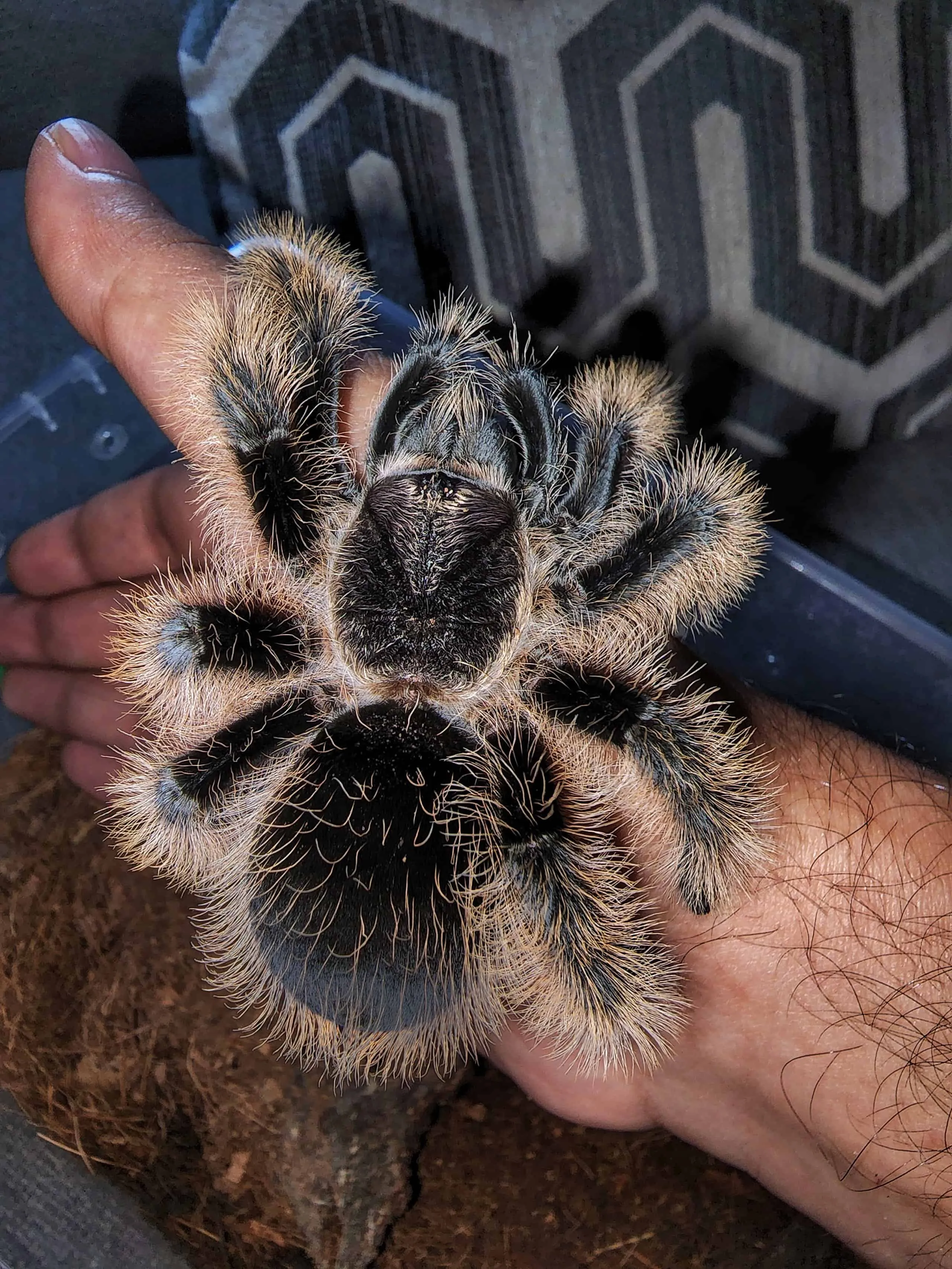
Understanding Curly Hair Tarantulas
The Curly Hair Tarantula (Tliltocatl albopilosus), a popular choice among arachnid enthusiasts, originates from the tropical forests of Central America. Known for its docile temperament and striking appearance, this tarantula is a relatively easy species to care for, making it ideal for both beginners and experienced keepers. Understanding the basic characteristics of the Curly Hair Tarantula is the first step in determining its sex. These tarantulas are characterized by their characteristic hairs that give them their name, as well as their relatively slow growth rate compared to other species. Proper identification of gender is crucial for providing optimal care, breeding attempts, and knowing what to expect as they grow. This guide will help you to unlock the secrets of sexing your Curly Hair Tarantula, improving your ability to care for these captivating creatures.
Male vs Female [Key Differences]
Distinguishing between male and female Curly Hair Tarantulas is essential for responsible pet ownership, particularly if you are interested in breeding. While both sexes share similar physical traits, subtle differences allow for accurate identification. Typically, males are smaller with a less robust build compared to females. Females tend to have a longer lifespan, often living up to 20 years or more, while males typically live for only a few years after reaching maturity. These differences extend beyond size and lifespan; males develop specialized structures used for mating. Recognizing these distinctions will allow you to provide appropriate care and appreciate the unique characteristics of each sex of your Curly Hair Tarantula.
Size and Appearance Variations

One of the initial indicators of sex is the size and overall appearance of the Curly Hair Tarantula. Generally, females tend to be larger and more heavily built than males. As they mature, females develop a more rounded abdomen to accommodate egg production. Males, on the other hand, are typically smaller with longer legs and a slightly less bulky build. While size alone isn’t a definitive indicator, it can offer clues when combined with other sexing methods. Observing these variations is a fundamental aspect of understanding the physical differences between male and female Curly Hair Tarantulas and is especially helpful with mature specimens. Remember that these are general rules, and individual variations can occur.
Coloration and Markings
While the overall coloration of Curly Hair Tarantulas is similar between sexes, slight variations can sometimes be observed. Both males and females display the characteristic golden-brown hairs covering their bodies, giving them a ‘curly’ appearance. However, some experienced keepers have noted subtle differences in the intensity or distribution of these hairs. It’s important to remember that coloration alone is not a reliable method of sexing. Factors like lighting, diet, and individual genetics can significantly influence the color of the tarantula. Instead, coloration should be considered alongside other methods for more accurate sex determination, as it may provide supporting evidence but rarely a conclusive answer.
Sexing Through Molt Analysis
Molt analysis is one of the most reliable methods for sexing a Curly Hair Tarantula. When a tarantula molts, it sheds its exoskeleton, providing a clear view of its reproductive organs. Examining the cast skin allows you to look for specific sexual characteristics. In females, look for the presence of a spermatheca, which is a pouch-like structure used for storing sperm after mating. Males will not have a spermatheca, but may have a bulge on the underside of the abdomen where the epigastric furrow is located. Properly identifying these structures on the molt is the most accurate way to determine the sex of your tarantula, especially in sub-adult or adult specimens. Careful examination under proper lighting conditions is crucial for success.
The Exoskeleton’s Role

The exoskeleton of a Curly Hair Tarantula acts as a crucial tool in the sexing process through molting. The shed exoskeleton, or molt, offers valuable insights into the tarantula’s internal anatomy. When the tarantula molts, it leaves behind a complete cast of its external features, including the structures required to determine sex. The ability to examine the exoskeleton carefully is pivotal for accurate sexing. This process allows you to visually inspect the ventral side of the abdomen for the presence or absence of the spermatheca, offering a direct look at its reproductive anatomy. Collecting and preserving molts can therefore be an essential part of owning a Curly Hair Tarantula.
Spermatheca and Epigastric Furrow
The presence or absence of specific structures on the molt is key to determining sex. In female Curly Hair Tarantulas, the spermatheca, a small pouch-like structure, is visible on the molt. This structure is used to store sperm. Its presence definitively indicates a female. Males lack a spermatheca. However, they have an epigastric furrow, a groove found on the underside of the abdomen. The epigastric furrow is not always as easily observed. Examining these specific features on the molt allows you to determine the sex of your Curly Hair Tarantula with a high degree of accuracy. Proper lighting and magnification can greatly assist in this process, especially for younger tarantulas.
Leg Spans and Body Proportions
Leg span and body proportions can offer additional clues, although they are less definitive than molt analysis. Male Curly Hair Tarantulas often have longer legs relative to their body size compared to females. Their overall build tends to be less robust. Females, on the other hand, usually have a more compact and sturdy appearance with a larger abdomen. This is due to the fact that they need room to house eggs. However, it’s crucial to remember that these differences can vary, and relying solely on body proportions is not recommended. Combining this observation with the other methods, particularly molt analysis, can help improve accuracy.
Sexing by Examining Pedipalps

Examining the pedipalps, the small leg-like appendages near the tarantula’s mouth, can provide a secondary method of sexing mature male Curly Hair Tarantulas. Mature males develop what are called ‘bulbous palps’ or ‘boxing gloves’ on the ends of their pedipalps. These structures are used to store sperm. If you observe these bulbed palps, the tarantula is definitely a male. This method is only reliable for adult males, as the bulbous palps do not develop until the final molt. Observing these can confirm the sex of an adult Curly Hair Tarantula, however, it is only useful in conjunction with other techniques, particularly if it is not fully mature.
The Importance of Proper Lighting
Adequate lighting is crucial for accurate sexing of Curly Hair Tarantulas. Proper illumination allows you to clearly see the subtle differences in the molt and external features. A bright, focused light source, such as a desk lamp or a flashlight, is ideal. Position the light to illuminate the molt or tarantula from different angles to highlight the key features. In addition to lighting, it’s also helpful to use a magnifying glass or a jeweler’s loupe to examine the delicate structures closely. Without good lighting, sexing Curly Hair Tarantulas can be difficult or even impossible. Make sure you have a well-lit workspace and the appropriate tools.
Expert Tips for Accurate Sexing
To increase the accuracy of sexing your Curly Hair Tarantula, here are some expert tips. First, always compare the characteristics with a reliable reference, such as photos or guides. Second, examine the molt carefully under good lighting. Use a magnifying glass to see the finer details. Third, don’t rely on a single method. Combine multiple techniques for a more reliable result. If you are unsure, consider consulting with an experienced breeder or arachnid expert. Finally, be patient and avoid rushing the process; thorough examination is more important than speed. With these tips, you can become proficient at sexing your Curly Hair Tarantulas and provide better care for your pets.